Continuity-native literary infrastructure.

A preservation-first publishing environment for authored work. Essays, books, editions, and cultural memory rendered as a typed substrate — built to outlast the platforms it runs on.

A literary substrate, not a publishing tool.

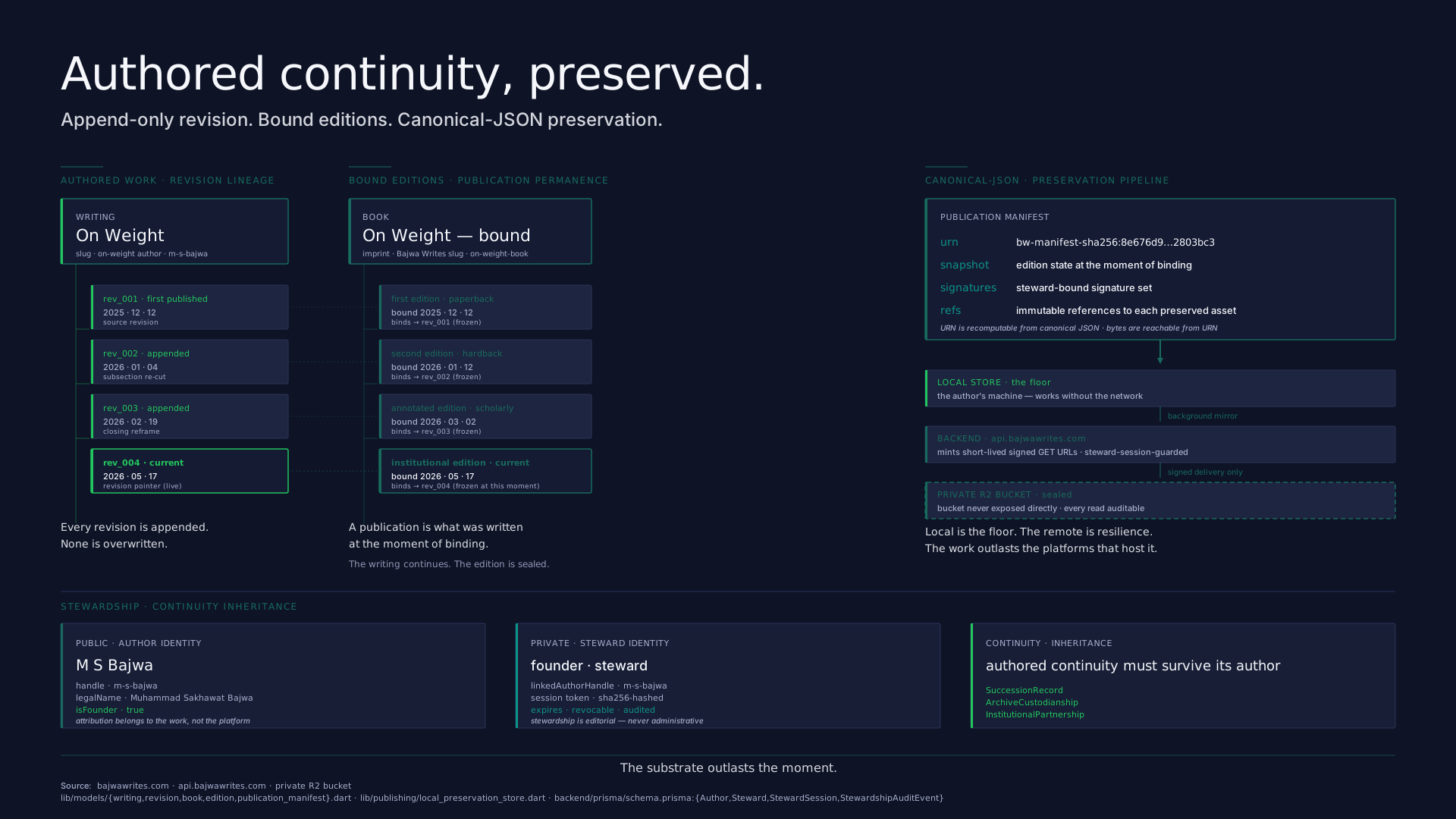
Most publishing platforms optimise for production speed and audience capture. Bajwa Writes is built on the opposite premise: a writing's worth is its continuity. Every revision is appended, none overwritten. Every edition binds a specific revision and stays sealed. Every publication carries a canonical-JSON manifest with a content-addressed URN that names the bytes, not the URL. Multilingual translation lineage is carried as an architectural property of the data model — implicit infrastructure, not the system's identity.

The platform records what was written, when, by whom, against which prior revision, into which bound edition. Years from now, a reader can trace the lineage of a single sentence across revisions, editions, and the institutional ceremonies that surrounded its publication.

Authored continuity, not engagement.

What is published belongs to the author, the language, and the archive — not the platform.

A publication is what was written at the moment of binding.

A revision is the writing. An edition is what the writing was on the day it was bound. The two are not the same. Bajwa Writes records both as typed first-class objects: a writing accumulates revisions; a bound edition fixes a specific revision and stays sealed. The writing continues. The edition does not.

Every edition carries a typed binding pointer back to the exact revision it captured at the moment of publication. Readers years later can trace which version of the writing a particular book contained, and verify that the bound bytes have not drifted from the canonical record.

The writing continues. The edition is sealed.

Publication ceremonies, edition lineage, and institutional binding records are first-class concepts in the model — the structural anchors that make a published work a permanent literary artefact, not a feed entry.

Preservation-first. The canonical form is permanent.

Every publication carries a canonical-JSON form. A content-addressed URN names the bytes of that form. The URN is recomputable from the content; the content is reachable from the URN. The platform records what existed at the moment of publication, and that record is appended-to, never edited.

Bytes live in private object storage. The institutional backend mints short-lived signed delivery URLs and never exposes the bucket directly. Every read is auditable. Every write is bound to a verified steward session — the institution can prove who recorded what, when.

The local copy of any writing is the floor. When the network is gone, the work remains readable on the author's machine. The remote is resilience, not authority.

Local is the floor. Remote is resilience.

The author is the literary identity. The steward is the private one.

A public author identity carries the work — its pen name, its handle, its signature, its hub bio. A private steward identity carries the authority to act on it. The two are distinct and durably linked. Stewardship is editorial, not administrative; the platform refuses the language of dashboards.

Every protected action is recorded on an append-only audit trail. Sessions expire. Sessions revoke. The bootstrap credential is exchanged once at sign-in for a real session token that the platform can revoke at any time.

Authored continuity must survive its author.

Stewardship councils, succession records, and archive custodianship are first-class concepts. The work continues beyond the founder author by design.

A sibling canon to the governance products.

Aura Platform LLC ships two governance products — Aura and Orchestrate — that share an architectural fingerprint: typed authority, refusable gates, persistent lineage, deterministic floor. Bajwa Writes is the institution's literary product. Different domain, same conviction.

The governance products instantiate the fingerprint across civic discourse and managed-outbound execution. Bajwa Writes runs on a sibling canon: preservation-first publishing, append-only revision, typed translation lineage, authored continuity.

Two canons, one institution. The substrate that makes the governance products outlast the model layer is the same substrate that makes literary work outlast the platforms that host it.

The substrate outlasts the moment.

Direct, institutional, on-record.

Bajwa Writes is operated by Aura Platform LLC. Institutional enquiries, partnership requests, and questions of stewardship reach the founder by email.

Institutional & investor hello@auraplatform.org

Read the work bajwawrites.com